

.svg)
AI has become exceptionally good at surfacing problems on the line, from motion deviations to cycle-time drift to emerging bottlenecks. Yet in plant after plant, the same disconnect appears: insights are abundant, but behavior change is slow. The challenge isn’t capability; it’s translating what the model sees into actions operators can understand, trust, and apply in the moment. And that translation gap is exactly where most manufacturers feel the friction today.
The Challenge: AI Tells You What’s Wrong, But Not How Work Happens
Even with dashboards full of alerts and trends, insights often stay trapped in reports rather than shaping daily work. Operators hear about yesterday’s deviations during today’s huddle. Supervisors coach without seeing the exact context. CI teams chase variation without visibility into how tasks were actually performed.
The result is predictable: data-rich systems, but inconsistent execution. Closing that gap starts by bringing clarity directly to the point of work.
A Better Way: Visual Feedback Loops That Bring AI to the Line
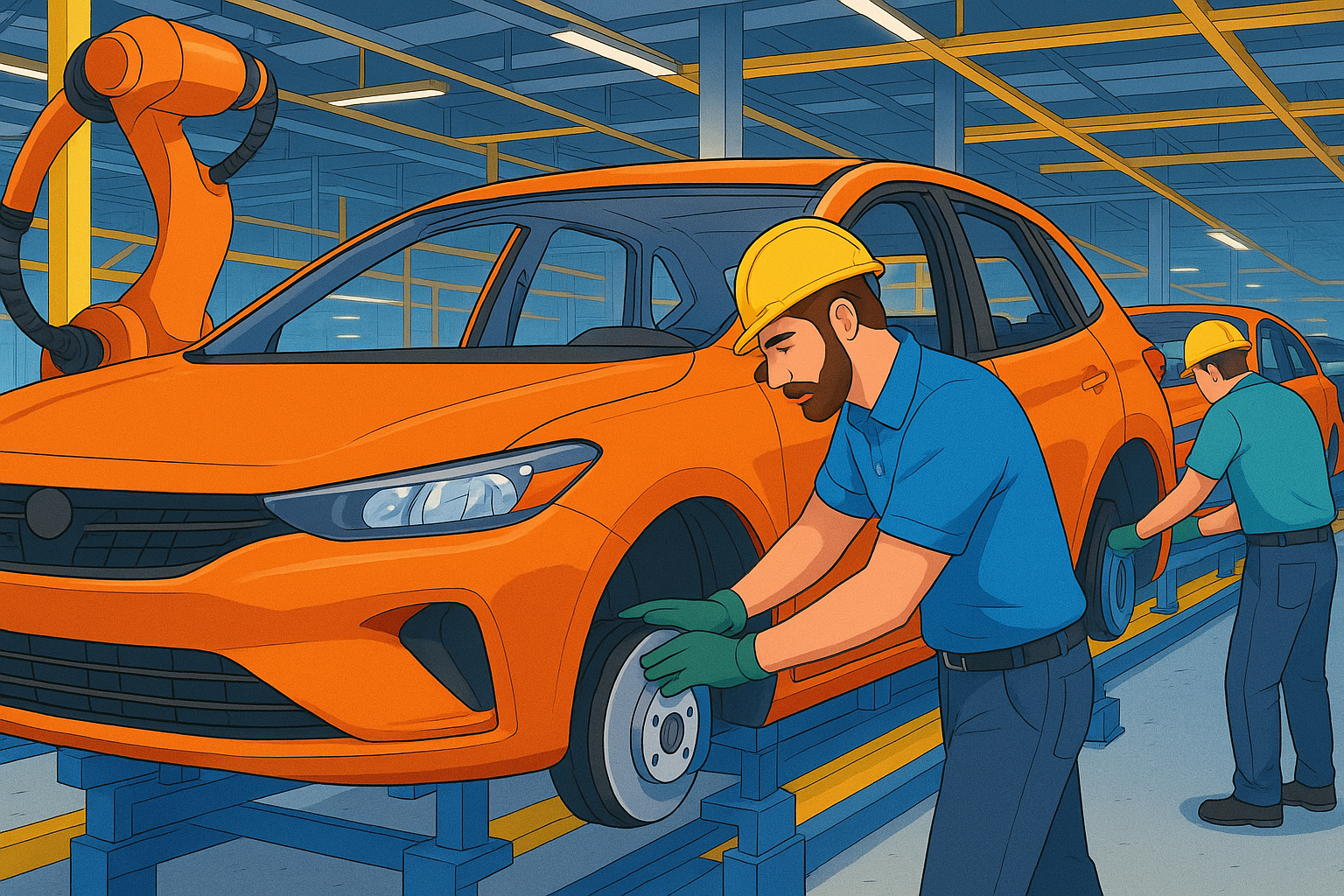
Instead of pushing insights to meetings, leading plants bring insights straight to the line. Real-time, visual feedback shows operators exactly where a motion or step drifted from standard work — within seconds, while the task is fresh. Research from IMEC and Veryable confirms that immediate visual cues drive faster learning, stronger adherence, and more reliable performance than delayed coaching or abstract metrics.
This shift turns AI from a planning tool into an everyday guide: operators gain confidence, supervisors coach with clarity, and small corrections happen continuously rather than retroactively.
The Missing Link for CI Teams: Evidence, Not Anecdotes
For CI leaders, visual feedback loops fill a long-standing void. Instead of relying on interpretations or after-the-fact reports, teams get clear footage, precise timing, and concrete examples of where work diverged. This gives them the “why” behind variation — and the ability to confirm whether fixes actually stick.
It’s a direct line from insight → behavior → sustained improvement, grounded in evidence rather than assumptions.
How Invisible AI Helps Manufacturers Make AI Actionable
Invisible AI’s vision platform captures operator motion in real time — no wearables, no sensors, no manual tagging. The system highlights deviations, surfaces coaching moments, and shows the exact steps that need adjustment. Operators receive instant, visual micro-corrections; supervisors see clear trends; CI teams gain the context needed to drive meaningful improvement.
In plants across automotive, heavy equipment, and electronics, we’re seeing the same outcome: when people can see the work, they can improve it.
Start Small: One Workstation, One Loop, One Win
The most successful deployments don’t begin with plant-wide overhauls. They start where variation is highest: one workstation, one operator group, one feedback loop. Once teams experience the clarity and impact of real-time visibility, expansion becomes natural — and improvement compounds across shifts and lines.
Ready to Turn AI Insights Into Better Work, Shift After Shift?
If you’re focused on reducing variability, strengthening standard work, and improving cycle-time consistency, the next step isn’t more analytics — it’s making insights visible where the work actually happens.


