
Continuous improvement has been a manufacturing philosophy for decades, but the tools available to support it haven’t always kept pace with the ambition behind it. Kaizen events, Six Sigma projects, and lean initiatives all depend on accurate, ongoing data about what’s actually happening on the production floor, yet many plants still run these programs on a foundation of manual observation, periodic audits, and incomplete data. Software for continual improvement is changing that, giving manufacturing teams a continuous, objective evidence base to identify opportunities, test changes, and measure real impact over time.
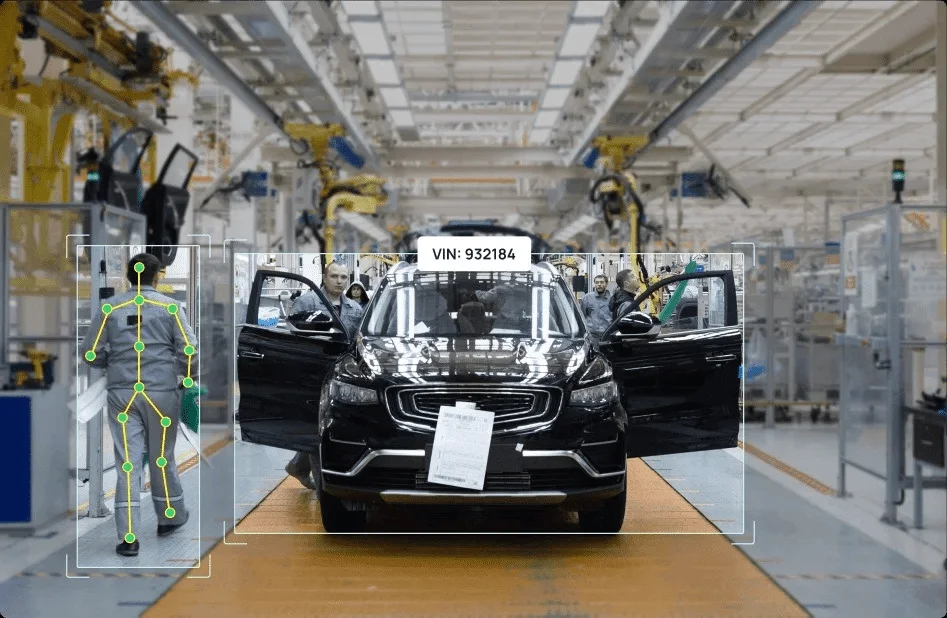
Invisible AI builds computer vision-based software that supports continual improvement programs with real, ongoing floor data rather than isolated snapshots. This page explains what software for continual improvement actually does, why data-driven continuous improvement outperforms traditional periodic methods, the technical capabilities that make ongoing improvement tracking possible, and how Invisible AI’s platform supports improvement initiatives across the plant.
What Is Software for Continual Improvement, and Why Does Data-Driven Improvement Matter?
Software for continual improvement is technology designed to support the ongoing cycle of identifying operational issues, implementing changes, and measuring results that sits at the heart of lean manufacturing, Six Sigma, and kaizen methodologies. Rather than treating improvement as a series of discrete, calendar-driven projects, this kind of software provides the continuous data infrastructure needed to improve an ongoing, evidence-based process rather than a periodic initiative that depends heavily on the specific team running it.
Traditional continuous improvement efforts often run into a data problem. A kaizen event might identify a promising process change based on a few days or weeks of manual observation, but without a continuous data stream, it’s genuinely difficult to know whether the change produced a lasting improvement or whether initial results reflected short-term variation, a particularly attentive team, or the well-known Hawthorne effect of people behaving differently while being watched. Software for continual improvement solves this by keeping the same rigorous measurement standard in place before, during, and long after a specific improvement initiative, turning improvement from a project into a genuinely continuous practice.
This has real, practical implications for how improvement programs operate:
- Objective baseline measurement, giving teams an accurate starting point before implementing any process change
- Ongoing impact verification, confirming that improvements hold up over weeks and months, not just during the initial pilot window
- Faster identification of new improvement opportunities, since the same continuous data stream that measures existing initiatives also surfaces emerging issues worth investigating next
- Reduced reliance on manual time studies, which are labor-intensive, disruptive to normal operations, and only capture a narrow slice of actual working conditions
- A shared, plant-wide evidence base that keeps improvement efforts aligned with what’s actually happening on the floor, rather than anecdote or intuition
As manufacturers face increasing pressure to do more with existing capacity, software for continual improvement has become a critical enabler, turning continuous improvement from an aspirational value statement into an operating discipline backed by consistent, reliable data.
The traditional continuous improvement model -kaizen events, periodic time studies, scheduled audits,-has produced real results in manufacturing for decades. But it has a structural limitation: it’s fundamentally episodic, gathering intensive data for a short window and then reverting to normal, lower-visibility operations until the next scheduled review. Software-driven continual improvement removes that gap entirely, replacing episodic measurement with an always-on data stream.
This distinction matters for several reasons. First, episodic measurement is vulnerable to timing bias; a time study conducted during an unusually smooth week will produce very different findings than one conducted during a difficult week, and neither may accurately represent typical operating conditions. Continuous data collection averages out this noise, giving teams a far more representative picture of actual, sustained performance.
Second, periodic methods struggle to detect improvement decay. It’s common for a process change to show promising results immediately after implementation, only to gradually drift back toward old patterns over the following weeks as attention moves elsewhere. Without continuous measurement, this regression often goes unnoticed until performance metrics eventually raise a flag much later, by which point the original improvement effort has effectively been wasted. Continual improvement software keeps the same data stream running well past the initial implementation, catching this kind of drift early enough to reinforce the change before it fully erodes.
Third, data-driven continuous improvement dramatically shortens the cycle time of the improvement process itself. Traditional kaizen cycles often run on a schedule of weeks or months, constrained partly by how long it takes to gather enough manual observation to draw reliable conclusions. When accurate data is already being collected continuously, teams can identify issues, test changes, and validate results in a fraction of that time, allowing far more improvement cycles to run in the same period.
Finally, continuous, software-based data collection reduces the disruption that manual measurement methods often introduce. Time studies and manual audits require someone to be actively present, observing and recording, which not only consumes valuable team time but can also change how operators behave while being directly watched. Automated, camera-based monitoring captures normal operating conditions without that same observation effect, producing a more accurate picture of how the line actually performs day to day.
The Technical Capabilities Behind Effective Improvement Software
Supporting genuine continual improvement requires more than dashboards; it requires the right combination of continuous data capture, historical analysis, and change-tracking capability.
Continuous baseline and trend tracking: Effective improvement software maintains an ongoing record of key performance metrics cycle time, downtime causes, quality events, and safety observations- so that any team can establish an accurate baseline at any point and track how performance trends over time, without needing to run a dedicated data collection effort first.
Before-and-after comparison tools: When a process change is implemented, the software should make it straightforward to compare performance before and after the change, using the same continuous data stream rather than a separately conducted study, which keeps the comparison fair and consistent.
Root-cause context, not just metrics: Numbers alone rarely explain why a change worked or didn’t. Platforms that pair quantitative metrics with visual context, actual footage, or event detail tied to each data point give improvement teams the ability to understand the “why” behind performance changes, not just the “what.”
Long-term monitoring beyond the initial pilot: Genuine continual improvement software keeps measuring well after an initiative’s formal end date, making it possible to detect whether gains are holding steady, continuing to improve, or gradually eroding, insight that periodic, one-time studies simply can’t provide.
Cross-line and cross-shift comparability: Because improvement opportunities aren’t limited to a single line or shift, effective software applies consistent measurement standards across the full plant, making it possible to identify which teams or processes are outperforming others and to spread successful practices accordingly.
Accessible reporting for improvement teams: Continuous improvement efforts typically involve cross-functional teams operations, quality, and engineering- who need to review the same data without specialized technical training. Clear, accessible reporting and visualization tools ensure the underlying data actually gets used, rather than sitting unreviewed in a system few people access.
These capabilities work together to make software for continual improvement genuinely different from a one-time analytics report; it becomes an ongoing operating layer that improvement teams can rely on indefinitely, not just during a scheduled project window.
How Invisible AI Powers Continual Improvement Across the Plant
Invisible AI’s software for continual improvement is built directly into a broader platform that supports the full range of floor operations, giving improvement teams a single, connected source of data across every relevant function.
Our dedicated continuous improvement capabilities provide the ongoing baseline tracking, trend analysis, and before-and-after comparison tools that improvement teams need to validate process changes and sustain gains well beyond the initial implementation window.
That data is closely connected to our quality monitoring, which captures defect events and process deviations with full visual context, giving improvement teams the root-cause detail they need to design more effective corrective actions.
Our safety and ergonomics monitoring feeds into the same continuous improvement framework, helping teams identify and track the impact of ergonomic and safety-focused process changes alongside productivity and quality initiatives.
Broader production management data, including downtime, cycle time, and throughput, provides the operational backbone that most improvement initiatives ultimately aim to move, giving teams a clear, continuous view of whether their efforts are translating into real performance gains.
Invisible AI supports continual improvement programs in some of the most improvement-driven manufacturing sectors, including automotive production, where lean methodology has deep roots, and aerospace manufacturing, where continuous, well-documented process improvement is often tied directly to quality and compliance requirements.
Together, these capabilities make Invisible AI’s software for continual improvement a connected, ongoing evidence base helping manufacturing teams move beyond periodic improvement projects toward a genuinely continuous, data-driven improvement practice.
Frequently Asked Questions: Software for Continual Improvement
How is continual improvement software different from a one-time kaizen event? A kaizen event is typically a time-bound project built around a short window of intensive observation. Continual improvement software provides an ongoing, always-on data stream that supports establishing baselines, testing changes, and verifying that improvements hold up well beyond the initial project timeline.
Can continual improvement software help prevent process improvements from eroding over time? Yes. Because the software continues measuring performance long after a change is implemented, it can detect gradual drift back toward old patterns early, giving teams the chance to reinforce a change before the original improvement is fully lost.
Does this kind of software replace lean or Six Sigma methodologies? No. It supports these methodologies by providing the continuous, accurate data foundation they depend on, making it easier to establish baselines, validate hypotheses, and measure results. The underlying improvement frameworks and team practices remain just as important.
How does automated data collection compare to manual time studies? Automated, continuous data collection avoids the disruption and observation bias that manual time studies can introduce, since it captures normal operating conditions without requiring someone to actively watch and record in real time. It also removes the timing bias that comes from measuring only a limited window of operation.
Can continual improvement software be used across multiple plants? Yes, when built for scale. Platforms designed for multi-site deployment apply consistent measurement standards across facilities, making it possible to compare performance and spread successful improvement practices across the broader organization.