
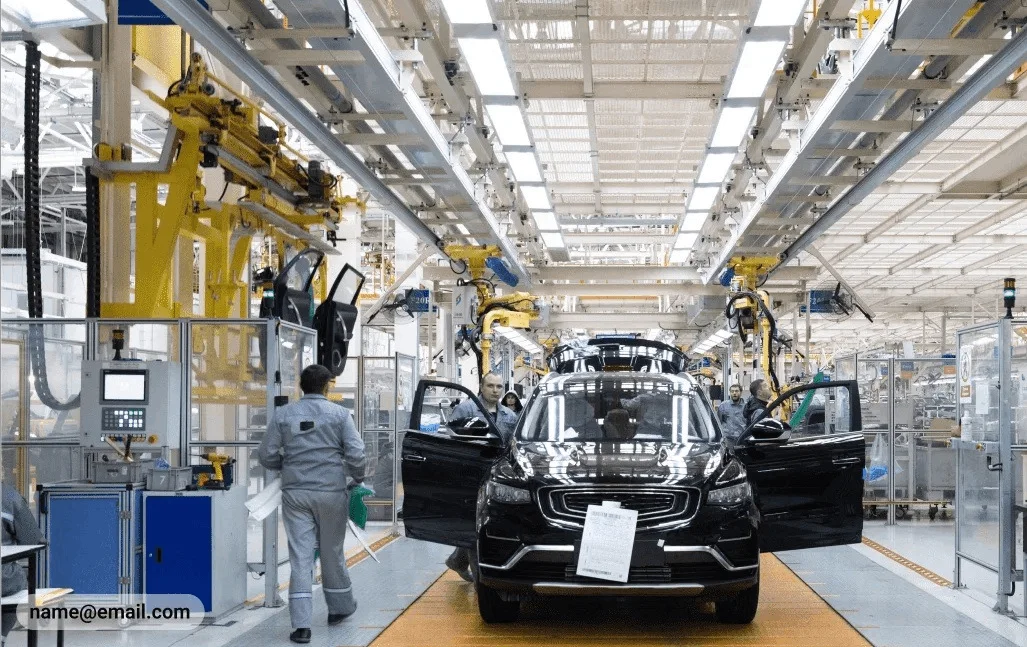
The difference between a minor line hiccup and a full-blown production crisis often comes down to how quickly the problem is spotted. Real-time production line monitoring gives manufacturers that speed, surfacing downtime, quality deviations, and safety concerns the moment they happen, rather than hours or days later during a shift report or audit. In an environment where every minute of downtime carries real cost, that immediacy isn’t a convenience; it’s a competitive necessity.
Invisible AI provides real-time production line monitoring built on computer vision, giving plant teams live visibility into what’s happening on the floor as it happens. This page covers what real-time monitoring actually means in a manufacturing context, why the speed of insight matters as much as the insight itself, the technical foundations that make true real-time monitoring possible, and how Invisible AI’s platform puts that capability to work across the plant floor.
What Is Real-Time Production Line Monitoring, and Why Does Speed of Insight Matter?
Real-time production line monitoring is the continuous observation and reporting of line activity as it occurs with minimal delay between an event happening on the floor and that event becoming visible, actionable data for the people who need to respond to it. This stands in contrast to traditional reporting models, where data is collected manually, compiled at the end of a shift, and reviewed well after the events it describes have already played out.
The distinction matters more than it might initially seem. A production line that stops for an undiagnosed reason isn’t just idle; it’s actively costing the plant money every minute it remains down. If that stoppage isn’t flagged and investigated until a shift-end report, valuable time has already been lost that could have been spent diagnosing and resolving the issue. The same logic applies to quality: a process drift or emerging defect pattern caught in real time might affect a handful of units, while the same issue discovered during a later quality audit could mean hundreds of units require rework or scrap.
Real-time production line monitoring delivers value across several dimensions of plant operations:
- Immediate downtime awareness, allowing maintenance and engineering teams to respond while the issue is still fresh and diagnosable
- Early quality drift detection, catching emerging defect trends before they scale into major rework or scrap events
- Live safety visibility, surfacing at-risk behaviors or conditions on the floor in time for intervention, rather than only appearing in after-the-fact incident reports
- Faster shift handoffs, since incoming teams have access to a live, accurate picture of line status rather than relying on secondhand summaries
- More responsive production management, giving supervisors and plant managers the ability to make in-the-moment staffing, scheduling, and process decisions based on what’s actually happening right now
As manufacturing operations become more complex and margins tighten, the ability to see and respond to floor conditions in real time, rather than reconstructing them after the fact, has become a defining differentiator between plants that consistently hit performance targets and those that struggle with chronic, hard-to-diagnose inefficiency.
It’s tempting to think of monitoring purely in terms of what data is collected. But in practice, the value of that data is inseparable from how quickly it reaches the people who can act on it. Real-time production line monitoring recognizes that timing is itself a critical variable in operational performance, not just a convenience layered on top of good data.
Consider downtime response. The root cause of a line stoppage is almost always easiest to diagnose in the moments immediately after it occurs: the operator is still present, the conditions on the line haven’t changed, and the sequence of events is fresh. Every hour that passes before someone investigates makes accurate diagnosis harder, and delayed response compounds the direct cost of the downtime itself. Real-time monitoring collapses that delay, connecting the moment of the event to the moment of response.
The same principle applies to quality management. Defects rarely appear in isolation; they’re often the visible symptom of a developing process issue, a tooling wear pattern, a material variation, or subtle process drift. Detected early, these issues can often be corrected with a minor adjustment. Detected late, after dozens or hundreds of units have already been affected, the same issue becomes a significant rework, scrap, or customer quality event.
Safety follows a similar logic, though with even higher stakes. An at-risk behavior or ergonomic strain pattern identified in real time can be addressed through immediate coaching or process adjustment. The same pattern, left unaddressed because it wasn’t visible until a periodic audit, has more opportunity to result in an actual injury before anyone intervenes.
In each case, the underlying insight might be the same, but the speed at which it becomes available fundamentally changes what’s possible in response. That’s the core value proposition behind real-time production line monitoring: it doesn’t just tell plant teams what happened, it tells them while there’s still time to change the outcome.
The Technical Foundation Behind True Real-Time Monitoring
Delivering genuine real-time production line monitoring- not just frequent reporting, but truly live, low-latency visibility- requires a specific set of technical capabilities working together.
Continuous automated observation: Real-time monitoring depends on the line being observed continuously, without gaps that depend on manual check-ins or periodic data entry. Computer vision-based systems, drawing on camera feeds already present or newly deployed on the floor, provide this kind of always-on observation without requiring a person to actively watch or record every moment.
Low-latency event detection and processing: Capturing an event is only half the challenge; the system also has to identify and classify that event quickly enough for the resulting data to still be “real time” by the time it reaches a dashboard or alert. This requires efficient, well-optimized detection models capable of processing live video streams without significant processing delay.
Immediate, targeted alerting: Real-time data is only actionable if it reaches the right person at the right moment. Effective monitoring platforms route alerts and notifications based on the type and severity of the event, ensuring that a safety concern, a quality deviation, and a downtime event each reach the appropriate team member without unnecessary delay.
Live dashboards, not static reports: Where traditional reporting summarizes data after the fact, real-time monitoring platforms present continuously updating dashboards that reflect current line status, giving supervisors and managers an accurate, live view of operations at any given moment.
Reliable infrastructure at production scale: Real-time performance has to hold up consistently across every line and shift, not just in ideal conditions. This requires robust, scalable infrastructure capable of processing multiple simultaneous video streams across an entire plant, or multiple plants, without degradation in detection speed or accuracy.
Historical context alongside live data: The most useful real-time systems don’t just show what’s happening right now; they connect current events to historical patterns, helping teams quickly recognize whether a live event is an isolated occurrence or part of a recurring trend worth deeper investigation.
Invisible AI’s platform is built around this full technical stack, ensuring that “real time” isn’t just a marketing term but an operational reality that plant teams can depend on for time-sensitive decisions.
How Invisible AI Delivers Real-Time Visibility Across the Plant
Invisible AI applies real-time production line monitoring across the core functions that define plant performance, giving teams live visibility wherever it matters most.
Our safety and ergonomics monitoring surfaces at-risk behaviors and ergonomic concerns as they happen, allowing safety teams to intervene in the moment rather than relying solely on retrospective incident review.
In quality management, real-time detection of defects and process deviations allows quality teams to catch and correct emerging issues before they scale into larger rework or scrap events.
Our production management capabilities bring live line status, downtime, and throughput data directly to supervisors and plant managers, supporting faster, better-informed operational decisions throughout the shift.
That same real-time data stream also powers continuous improvement efforts, giving teams an ongoing, live feedback loop to evaluate process changes as they’re implemented rather than waiting for periodic review cycles.
Invisible AI’s real-time monitoring is deployed in demanding, high-throughput environments including automotive manufacturing, where line speed makes fast response essential, and aerospace production, where precision and traceability requirements leave little room for delayed issue detection.
Across each of these areas, Invisible AI’s real-time production line monitoring gives manufacturers the one advantage that after-the-fact reporting simply can’t provide: the ability to act while there’s still time to change the outcome.
Frequently Asked Questions: Real-Time Production Line Monitoring
How is real-time monitoring different from traditional shift-end reporting? Shift-end reporting summarizes what happened after the fact, often hours after an event occurred. Real-time monitoring surfaces events as they happen, allowing teams to respond immediately rather than reconstructing and addressing issues well after the window for easy correction has passed.
What kinds of events can be tracked in real time on a production line? Common examples include downtime events, quality deviations and defects, safety-related behaviors, and throughput or cycle time changes, all of which can be captured and surfaced live through computer vision-based monitoring systems.
Does real-time monitoring require constant human attention to a dashboard? No. Real-time systems are typically designed to route targeted alerts to the relevant team members based on event type and severity, so teams don’t need to continuously watch a live feed to benefit from real-time visibility.
Can real-time monitoring scale across multiple production lines or plants? Yes, when built on the right infrastructure. Platforms designed for production-scale deployment can process multiple simultaneous video streams across many lines and facilities while maintaining consistent, low-latency detection performance.
How does real-time monitoring support faster root-cause analysis? Because the event is captured and surfaced at the moment it occurs, teams can investigate while conditions on the line are still fresh and relevant details haven’t been lost to time or memory, significantly shortening the diagnostic process compared to after-the-fact investigation.